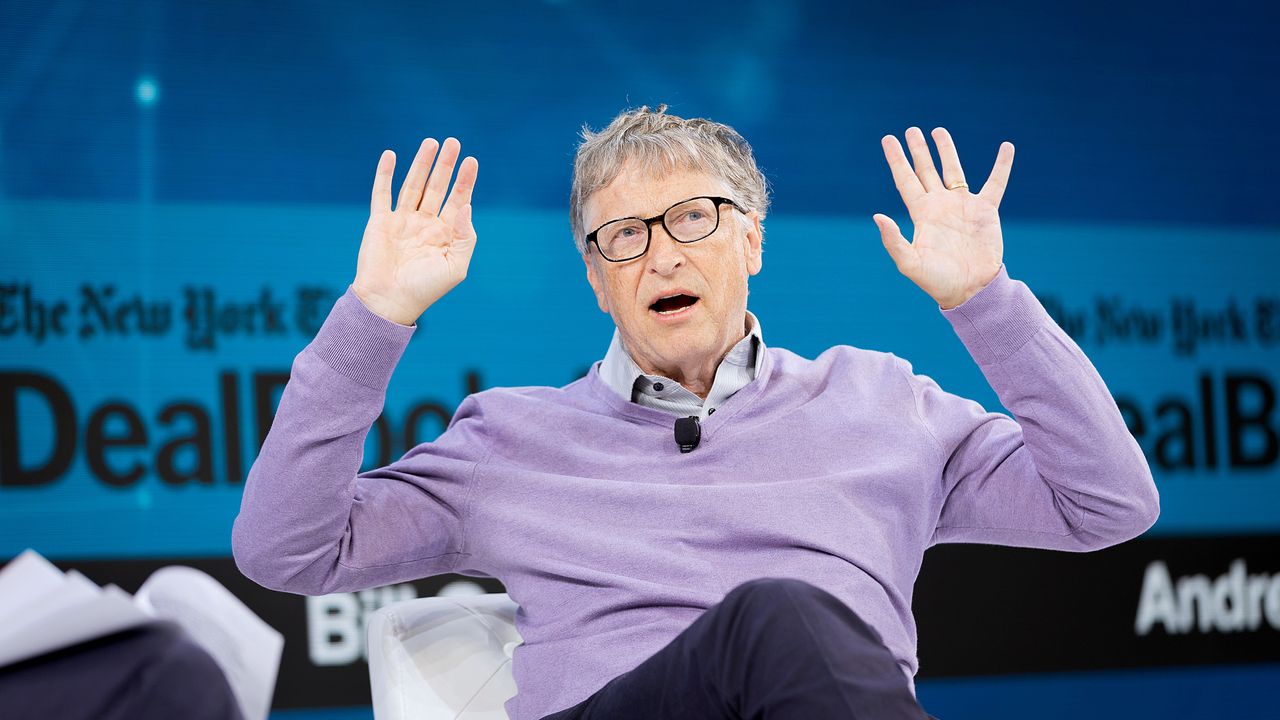
Bill Gates published an essay on his GatesNotes blog arguing that governments and society are not doing enough to prepare for the disruption artificial intelligence will bring, and that difficult decisions need to be made now rather than after AI becomes capable of doing far more human work. He contends that AI differs from past technologies like computers and the internet because people had decades to adjust to those, while AI is already widely available today.
Gates' central proposal is a concept he calls "Human Reserved" — designating certain jobs or activities to remain in human hands even if AI eventually becomes capable of performing them. He compares this to setting aside land as a nature reserve, not because it couldn't be developed, but because preserving it has value. Examples he raises include child care and jury service, where humans might choose to keep responsibility even if machines could technically do the work.
The idea becomes more complex in fields like education and health care, where AI is already being introduced. According to Tom's Guide, reserving these professions for humans wouldn't necessarily mean banning AI outright, but rather ensuring AI remains a tool — such as a teacher using AI to build personalized lessons, or a doctor using AI to analyze medical information — while a human stays responsible for the work. Gates also noted that "Human Reserved" jobs don't need to be fixed forever; they could evolve gradually as AI tools are introduced over years or decades, particularly for workers, such as a 55-year-old lifelong construction worker, who may not be able to pivot into an entirely different field like health care.
Gates argues that retraining alone won't solve the coming disruption, since AI and robots may eventually handle such a broad range of physical and cognitive work that no new economically necessary job is waiting on the other side of retraining. He warned that entry-level jobs have already fallen significantly, making it harder for new graduates to gain experience, and cautioned that some workers may not have time to adjust unless there is intervention. He specifically pointed to workers such as an accounting employee replaced by a bot or a $20-an-hour worker replaced by a $10-an-hour robot as those most in need of time and support they currently lack.
Gates also raised concerns about the fiscal impact of automation, noting that individual income taxes made up more than half of U.S. federal revenue in 2025 and 2026, according to the Treasury, meaning that job losses to AI could significantly reduce government revenue. He argued that current tax structures incentivize companies to replace workers with machines, since robots are often tax-deductible expenses, and proposed instead that governments tax AI tokens and robots to help offset lost revenue and encourage businesses to keep hiring people rather than replacing them.
Gates said he plans to address other AI-related issues, including risks from bad actors and the technology's effect on human relationships, in future posts. He said the debate over AI's use and impact should involve a broad range of voices — including workers, students, community leaders, religious leaders, parents and educators — rather than being left to the few who control the technology.