Elon Musk said in an X post that SpaceX and xAI will exclusively use Nvidia GPUs because 'they are the best.' He expanded on the decision during SpaceX's earnings call, saying the company has decided to build exclusively on Nvidia because it views the Vera Rubin architecture as the best AI computer design available, citing a close cooperation and partnership with Nvidia.
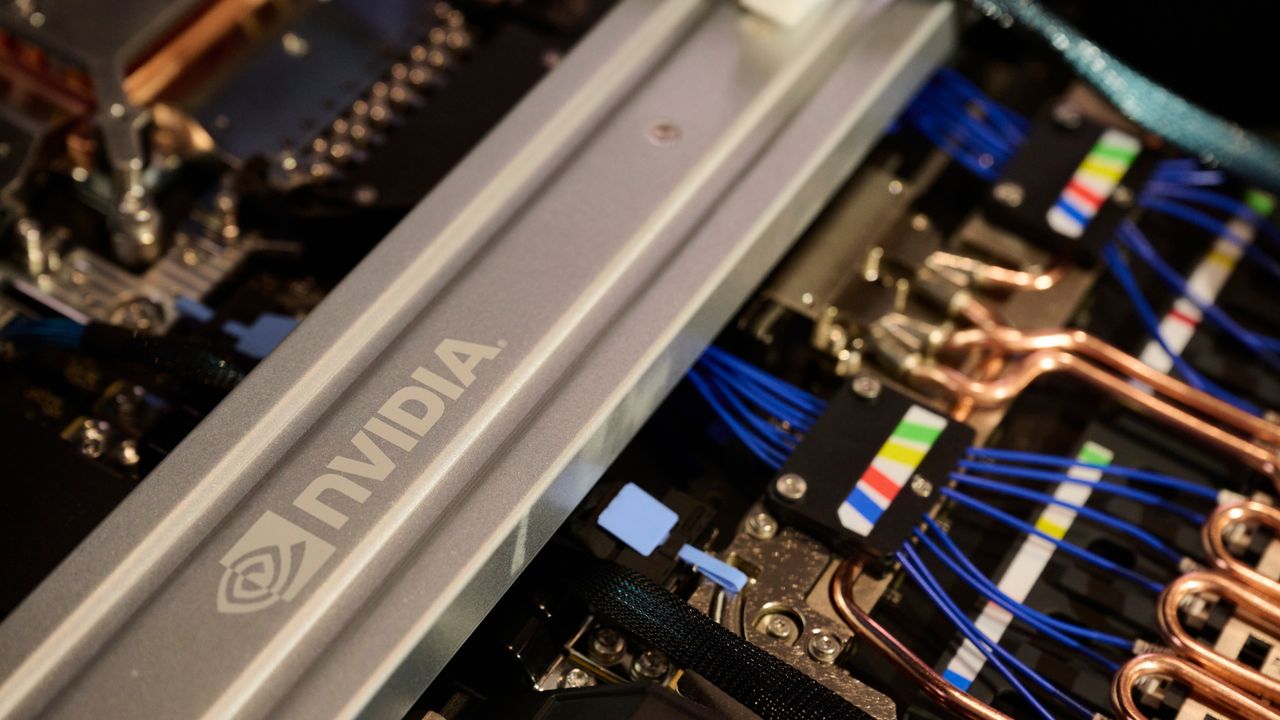
Musk specifically praised the design of Nvidia's Vera Rubin NVL72 VR200 rack-scale system, saying it is a much better design than a standard rack-style layout. According to Tom's Hardware, the cable-less design of the compute trays in this system improves serviceability, assembly speed, and reliability by reducing manual cable and hose connections that are common sources of installation errors and failures.
Historically, xAI has used Nvidia's Hopper and Blackwell hardware exclusively to train multiple generations of Grok, and its Colossus supercomputers have relied on Nvidia accelerators for years. Tom's Hardware noted that while AMD's Instinct MI300X accelerators were used to run Grok-1, there has been no public announcement or credible evidence that xAI evaluated or used AMD or other non-Nvidia accelerators in production, suggesting the exclusivity announcement formalizes an existing arrangement rather than reflecting a new decision.
Musk said SpaceX plans to deploy an optimized Vera Rubin NVL72 system called the Starmind AI satellite, with launches expected to begin next year. He said the plan is to deploy this system both on the ground and in orbit, framing it as a radical simplification of the normal NVL72 rack. According to Wccftech, Nvidia's Vera Rubin NVL72 rack, codenamed Kyber, will power SpaceX's AI data centers, with 2GW of compute capacity planned by the end of this year and 10GW expected by the end of 2027.
Tom's Hardware noted that Musk's ambitions for an NVL72-scale machine in space are more ambitious than Nvidia's own Space-1 Vera Rubin Module, which is designed to deploy a smaller number of Rubin accelerators. Wccftech reported that Nvidia's Space-1 module includes four Rubin GPUs and two Vera CPUs, offers up to 25 times the AI compute capability of the previous H100 GPU for orbital workloads, and is intended for real-time AI processing including geospatial intelligence, autonomous operations, and on-orbit analytics, with planned use by companies such as Aetherflux, Axiom Space, and Planet Labs.
Both outlets noted that many questions remain about cooling and reliability for large-scale AI hardware deployed in space. Wccftech also noted that SpaceX had previously announced a partnership with Anthropic to build a multi-gigawatt orbital AI data center, and that orbital compute could address bottlenecks common to terrestrial systems such as power, land, and cooling, though it noted that chip availability and the logistics of shipping large numbers of GPUs to space could become new bottlenecks.