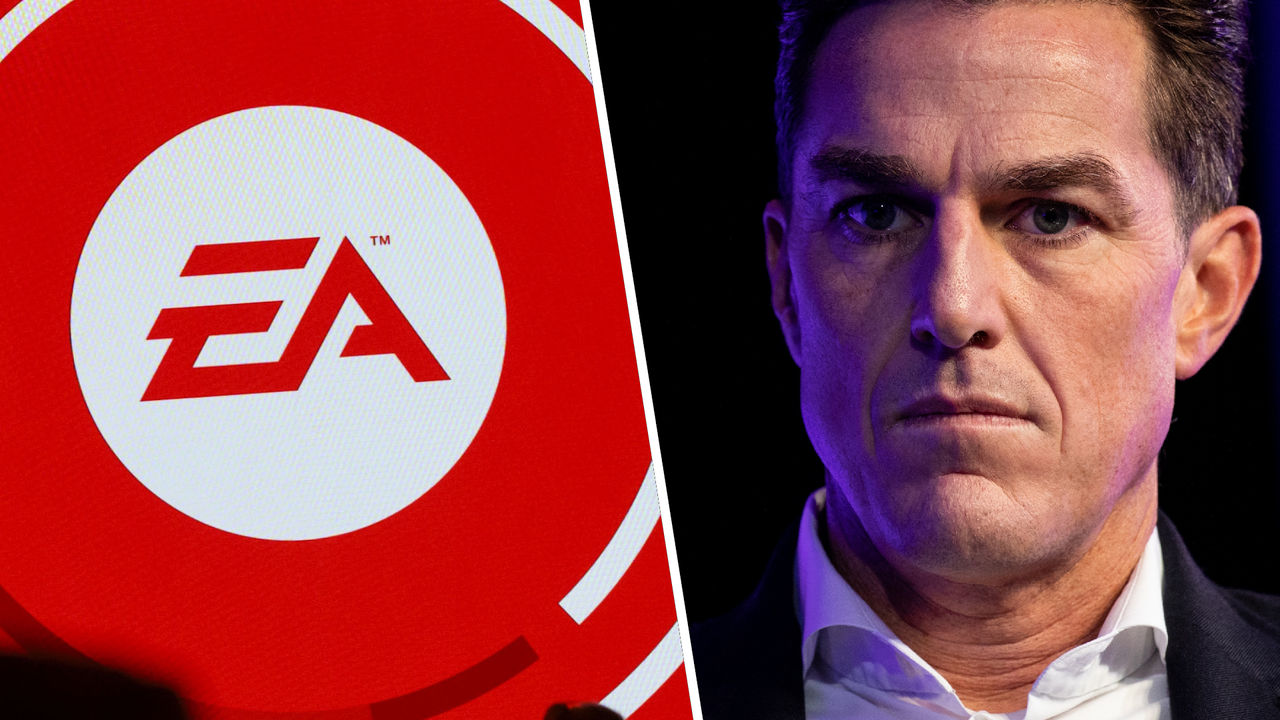
Electronic Arts has officially gone private after a $55 billion leveraged buyout by Saudi Arabia's Public Investment Fund (PIF), private equity firm Silver Lake, and Jared Kushner's Affinity Partners closed. EA will be delisted from the NASDAQ for the first time in 36 years, and all EA stockholders, including employees, will receive $210 per share. The deal was first announced last September and has since cleared regulatory hurdles including the European Commission and the U.S. Federal Trade Commission.
As part of the transaction, EA has taken on $18 billion in debt, resulting in roughly $1.8 billion in annual interest payments. According to Bloomberg reporter Jason Schreier, EA's annual EBITDA is around $1.5 billion, which should be enough to cover interest payments. However, Bloomberg reports that EA has told debt investors it plans to cut $700 million in annual costs, including $170 million described as "organizational efficiencies" — language multiple outlets, including Kotaku and PC Gamer, interpret as a signal of mass layoffs.
EA had previously told employees there would be "no immediate changes" to jobs, teams, or daily work as a result of the transaction, though it did not specify what "immediate" meant. EA CEO Andrew Wilson said in a statement that the company is "entering this next chapter from a position of strength" and that it will "invest boldly, accelerate innovation, and build the next generation of games." Kotaku notes that while employees face potential layoffs, Wilson's last SEC filing before the company went private showed a $77 million payout for the last fiscal year, double what was previously reported.
EA has already leaned on artificial intelligence to cut costs, with Wilson stating in April that about 85% of the company's quality assurance work now uses AI, though he claimed EA still hires more QA staff than ever to review AI findings. Polygon reports EA told investors in 2025 it expects $100 million in savings from AI tools used to help write code and lower operating costs, and that EA has also shifted support roles like customer service to cheaper overseas vendors and AI. Polygon notes EA has laid off an estimated 970 employees over the past two years, and outlets point to comparisons with Microsoft's acquisition of Activision Blizzard, which led to roughly 1,900 layoffs, as well as ongoing cuts at Ubisoft and Microsoft's own workforce.
Some in the industry are concerned about what the buyout means for EA's creative range. Arrowhead CEO Shams Jorjani, whose studio makes Helldivers 2, said he hopes the deal doesn't turn EA into a "sequel-and-mega-franchise machine," noting that EA's catalog has included both blockbusters like Battlefield and The Sims alongside smaller titles like Split Fiction and Unravel. Rock Paper Shotgun points to EA's Criterion Games, once behind Burnout and Need for Speed, now being folded entirely into Battlefield support work, and layoffs at BioWare following the underperformance of Dragon Age: The Veilguard, as signs the trend may already be underway. Polygon also notes fan concerns that cost-cutting could lead to more in-game monetization, pointing to EA's recently announced EA Advertising platform.
The wider industry context adds to the unease: PC Gamer notes that global games revenue surpassed $200 billion in 2025, even as layoffs continue across major publishers. What EA's future looks like under its new private ownership remains unclear, especially since the company is no longer required to publicly disclose as much information as it did while publicly traded.