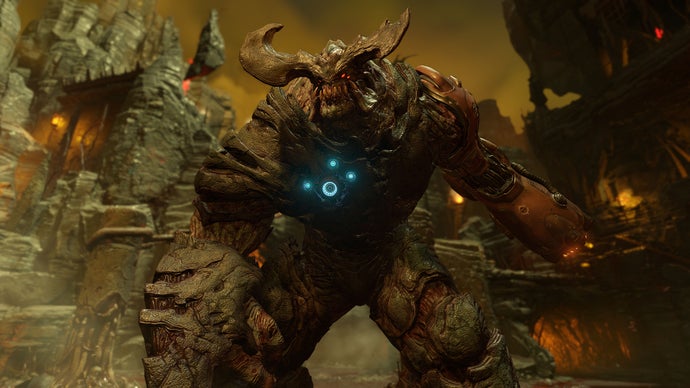
A lead developer at id Software has criticized Microsoft's recent job cuts at the studio, saying it is now impossible to make triple-A games on the scale of 2016's Doom with half the previous staff. Chris Hayes, described as lead services provider (also referred to as lead services programmer), made the comments in a roughly 90-minute conversation with Andre Peschke on the Well Played podcast, which also aired via the YouTube channel Auf ein Bier. The discussion focused on the events leading up to the layoffs and the push for unionization at id Software.
According to Hayes, id Software lost 136 roles as part of Microsoft's broader 'Xbox reset,' which eliminated 3,200 jobs company-wide, with 1,600 cuts effective immediately and the remainder to follow. Hayes said the layoffs were announced one day before the DLC release for Doom: The Dark Ages, after staff had just finished a period of heavy crunch to ship it. He described the timing as inhumane and said morale at the studio 'has never been lower,' adding that Microsoft has not communicated a clear plan for how the studio is meant to function going forward.
Hayes pushed back on public statements from Microsoft and id Software claiming the studio had not been 'nerfed into the ground and gutted' and that it remains 'the same id.' He disputed this directly, saying, 'We're not the same id. We're half the same id,' arguing that what made the studio successful was the cohesion and relationships between its people, not the IP or name. He also questioned Microsoft's claim that staffing levels are close to what they were during Doom (2016), noting that the game's credits list more developers than currently remain at the studio, and said the phrase 'close to' is used because current numbers are lower.
Hayes said he believes reassurances from leadership are intended to prevent remaining staff from leaving, and claimed these statements are part of talking points provided by Microsoft to studio heads. He said Microsoft's handling of the situation has damaged trust both internally and across the industry, noting that employees were previously told the company operated on a 'hire to retire' model, which he said no longer holds credibility. He said this loss of trust extends to studio-level management, since employees know decisions are ultimately made above that level.
On the practical impact of the cuts, Hayes said it is unclear how certain roles will be covered, questioning who will produce skyboxes, maintain infrastructure, or work on the engine given the loss of specialized teams. He also criticized Microsoft's use of Game Pass-era sales metrics, arguing that citing 'poor sales' under Bethesda doesn't account for the fact that games are also available through subscription rather than being sold individually. Hayes said he believes those responsible for the cuts do not understand art, games, or the underlying business model, arguing that the decisions were made without regard for how the studio's teams function together or for the long-term health of the studio, and speculated that the choices may be driven by short-term financial reporting concerns rather than sustainable planning.