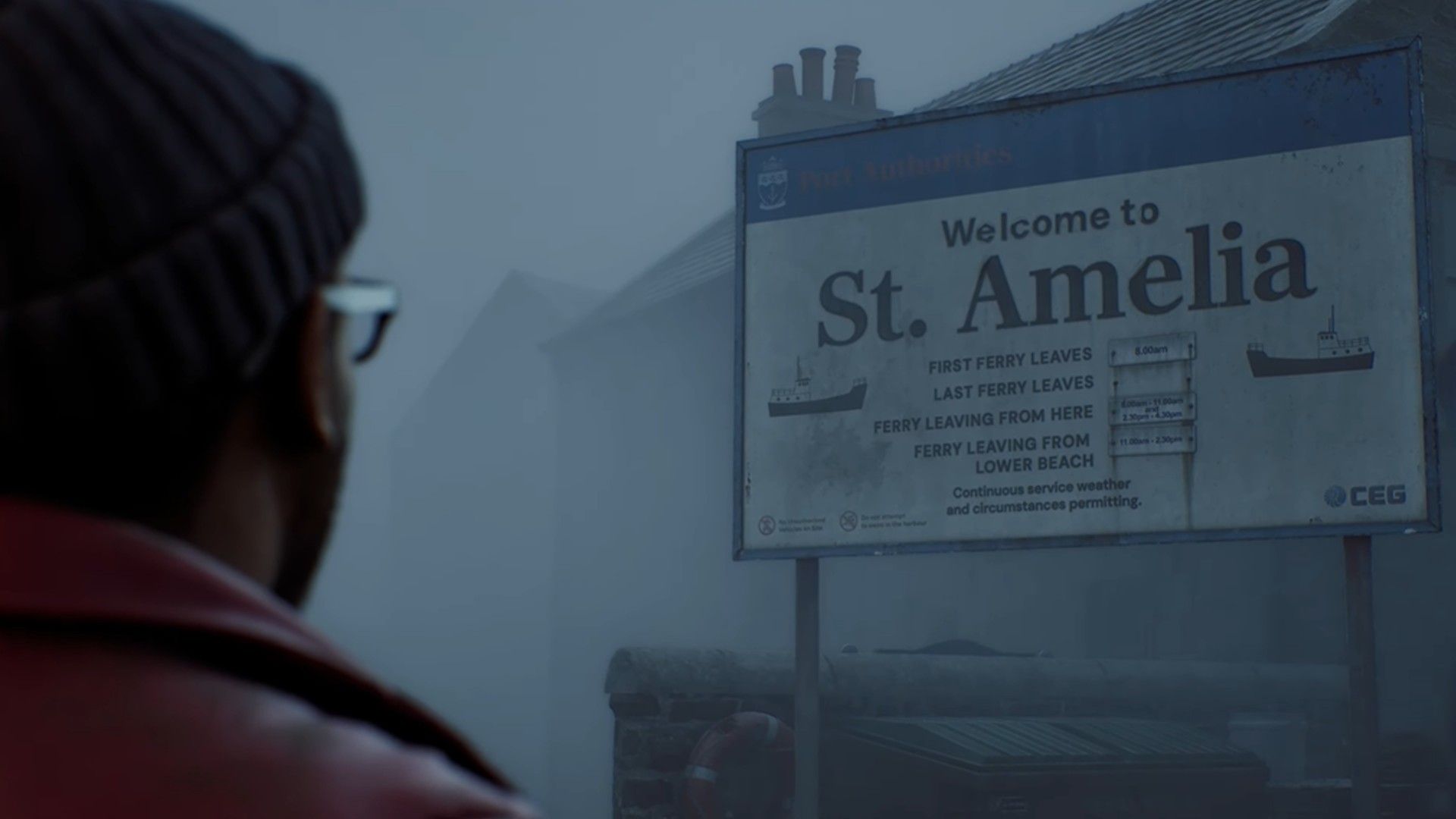
Silent Hill: Townfall, developed by Glasgow-based Screen Burn Interactive (formerly No Code) and published by Konami with Annapurna Interactive, is set for release on PlayStation 5 and Windows PC on Sept. 24. Journalists from Polygon and Eurogamer attended a preview event in Los Angeles in July where they played several hours of the game and interviewed writer-director Jon McKellan and series producer Motoi Okamoto. The game follows Simon Ordell, an amnesiac man who washes ashore near the fictional Scottish coastal town of St. Amelia in 1996 wearing a hospital bracelet and an IV port, searching for a woman named Zoe as he pieces together fragmented memories.
Both outlets report that Townfall is the first mainline Silent Hill entry told entirely in first person, a perspective McKellan says was part of Screen Burn's vision from the start, building on the studio's prior work on Stories Untold and Observation. McKellan told Polygon that first-person suited the game's emphasis on stealth and evasion over action, arguing that a visible avatar would make hiding and peeking mechanics feel more like an action game such as Splinter Cell than horror. Okamoto said Konami trusted Screen Burn to apply that perspective while preserving the studio's strengths in narrative and puzzle design.
A recurring gadget called the CRTV, a handheld portable television, replaces the radio device from earlier Silent Hill games, showing environmental clues, glimpses of Simon's memories, and the movements of nearby enemies. McKellan told Polygon the team recreated period-accurate visual noise by filming footage through an old broadcast monitor. Both previews describe additional 1990s-specific technology woven into puzzles, including dial-up internet, prepaid electricity meter cards, and pay phones; McKellan said the era was chosen partly because unreliable, pre-internet technology imposes narrative limitations that keep the game's mysteries intact, preventing Simon from simply looking up answers online.
According to Eurogamer, combat involves a degradable melee weapon, a firearm with scarce bullets that risks attracting attention when fired, and a peek-and-hide stealth mechanic, with three difficulty settings (story, normal, nightmare). Both outlets describe encounters with a red-lit 'Otherworld' featuring cement corridors and industrial tunnels, and Eurogamer notes manual saving is done via in-world telephones under the prompt to 'save yourself.' Eurogamer's reporter said the creature design felt like fairly standard Silent Hill fare aside from one notable early exception, and questioned a marketing line describing 'reality and delusion' intertwining, noting delusion isn't traditionally a core Silent Hill theme.
On the subject of endings, Polygon reports the game will have five, echoing multi-ending traditions from Silent Hill f and the Silent Hill 2 remake. McKellan described Townfall's structure as 'wide linear,' with room for players to tackle some sections in different orders, but said outcomes are not determined by explicit binary choices. Instead, he told Polygon that subtle patterns in how players act throughout — 'what did you do, what were your actions' — shape which ending they receive, a point Eurogamer's reporter also confirmed after being told there are no 'binary A/B choices.' McKellan added that the choice to set the story in a Scottish town near Screen Burn's home, rather than the series' traditional American settings, was meant to lend authenticity, while Okamoto said Konami views maintaining a strong psychological horror narrative as the franchise's core identity, allowing gameplay approaches to vary across entries like the Silent Hill 2 remake, Silent Hill f, and Townfall.