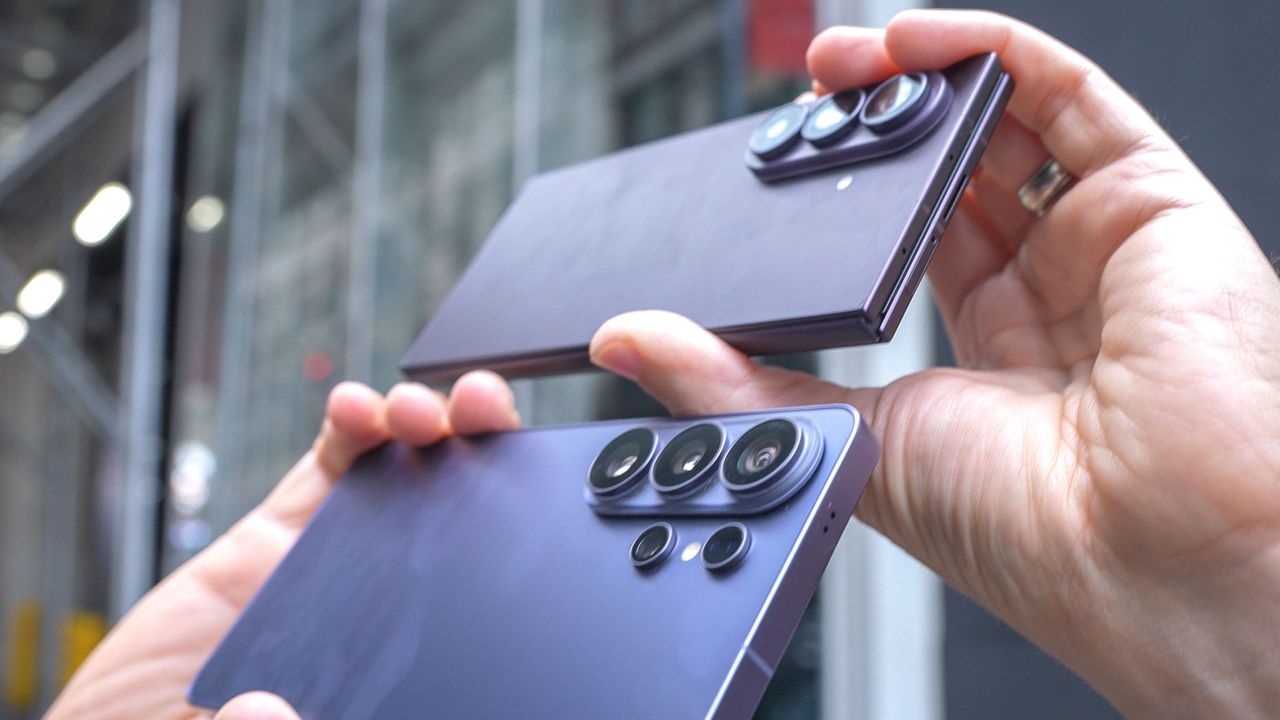
Samsung has for the first time applied its premium 'Ultra' branding to a foldable phone with the Galaxy Z Fold 8 Ultra, which shares a 200MP main sensor and 50MP ultrawide camera with the Galaxy S26 Ultra. However, the two phones diverge in key specs: the S26 Ultra has a wider f/1.4 main aperture versus the Fold 8 Ultra's f/1.7, and the S26 Ultra includes two telephoto lenses (a 10MP 3x and a 50MP 5x) reaching up to 100x zoom, while the Fold 8 Ultra has only a single 10MP 3x telephoto lens topping out at 30x zoom.
A side-by-side camera test from Tom's Guide found the Fold 8 Ultra actually produced sharper detail in 200MP main-camera shots, while color rendering and selfie quality were rated a tie between the two phones. The S26 Ultra won in ultrawide shots due to better dynamic range, and it also came out ahead in dedicated dynamic-range tests, portrait shots (with sharper fabric and stitching detail), and low-light photography, where its wider aperture better illuminated dark scenes.
The largest gap appeared in telephoto performance: at 5x zoom the S26 Ultra rendered crisper text with less noise, and the difference widened significantly at 10x and 30x zoom, where the Fold 8 Ultra's reliance on digital cropping from its single lens produced noticeably softer, blurrier results compared to the S26 Ultra's dedicated periscope lens. The outlet's verdict was that the S26 Ultra remains Samsung's top camera phone overall, and that the Fold 8 Ultra, despite closing the gap in some areas, doesn't fully live up to the 'Ultra' name given its price and shortfalls in low-light and zoom performance.
In a separate comparison, Tom's Guide examined the crease on the standard Galaxy Z Fold 8 against the Oppo Find N6, a foldable praised earlier this year for its subtle 'zero-feel' crease claim. Samsung's new Flex Titanium display technology reduces the crease compared to earlier Galaxy Fold models, but the Fold 8 retains a single, clearly defined crease down the middle of the screen that remains visible under direct light and produces a noticeable dip when touched.
The Oppo Find N6 takes a different approach, replacing a single crease with a series of small ripples that felt smoother to the touch and less noticeable overall, according to the comparison. With the displays turned on, both phones' creases largely faded from view during normal use, aided in Samsung's case by a new anti-reflective coating on the inner display.
Overall, the outlet judged the Find N6 the narrow winner on crease feel, while still crediting Samsung with a major improvement over previous Fold generations. Across both comparisons, Samsung's new foldables showed meaningful upgrades — sharper detail in some camera shots and a reduced crease — but still trailed rival devices (the S26 Ultra and the Find N6) in several head-to-head measures.